AirVani’s onboard subsystem integrates with OEM drone platforms to enable power transfer during flight. The subsystem includes the electrical architecture, control interfaces, and pantograph assembly required to connect the aircraft to AirVani’s power infrastructure.
This approach allows drone manufacturers and operators to preserve their existing aircraft designs while adding a new layer of endurance and mission capability.

AirVani’s ground infrastructure delivers power where drones operate. Our microgrid architecture can connect to existing electrical infrastructure or be deployed with generators, solar, battery storage, or other distributed energy sources.
By moving power generation and recharge requirements off the aircraft, AirVani enables drones to operate closer to the mission edge and in the last-mile with less dependence on centralized charging stations.
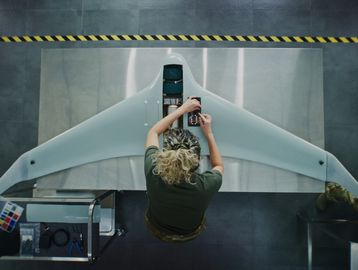
AirVani also supports payload integration for mission-specific applications. Whether the requirement is persistent surveillance, infrastructure inspection, emergency response, logistics, or counter-UAS support, we help integrate the sensors, communications, and mission systems required for the use case.
Our engineering focus is simple: match the aircraft, power system, and payload to the mission so operators can get more useful work from every drone.
AirVani can support persistent monitoring missions where drones need to remain available over extended periods. Initial applications include agriculture, forestry, critical infrastructure inspection, environmental monitoring, and industrial site awareness.
These use cases benefit from longer uptime, more frequent data collection, and the ability to support heavier or more capable sensor payloads.
Defense and security missions often require persistent coverage, rapid retasking, and reduced dependence on centralized charging locations. AirVani can support use cases such as installation security, perimeter defense, border surveillance, counter-UAS support, and drone-as-first-responder operations.
By extending drone endurance at the mission edge, AirVani can improve detection, response, and overwatch for security-sensitive environments.
AirVani’s initial logistics focus is small package delivery over repeatable routes where battery limitations constrain range, payload, or operational efficiency. This includes site-to-site delivery, medical and emergency resupply, campus logistics, rural delivery support, and controlled-route commercial package movement.
Over time, AirVani’s architecture may support heavier logistics applications, including port operations, drayage-adjacent routes, and other high-throughput cargo corridors.
As an aspiration, AirVani may support larger electric aircraft and passenger mobility systems by reducing onboard energy requirements and increasing aircraft utilization.
This creates a pathway toward infrastructure-enabled electric aviation, including regional shuttle services and other high-utilization mobility applications that are difficult to support with battery-only systems.
AirVani is currently in the R&D phase, developing and validating the core technologies required to power drones during flight.
We welcome conversations with investors, strategic partners, and mission-focused organizations who share our interest in unlocking the next era of electric aviation.
Copyright © 2026 AirVani - All Rights Reserved.
We use cookies to analyze website traffic and optimize your website experience. By accepting our use of cookies, your data will be aggregated with all other user data.